

15 Independent Activities for Toddlers & Preschoolers While You Homeschool Older Kids
You sit down to begin a homeschool lesson with your older child... and suddenly your toddler needs a snack, your preschooler wants to join in, and everyone needs you at the same time.
If you're homeschooling older children with a toddler or preschooler nearby, having a few simple activities ready can make your homeschool rhythm feel much more manageable.
These activities are designed to give little ones something engaging and developmentally appropriate to explore while you work with your older children—without expecting a 2-, 3-, or 4-year-old to sit independently for an unrealistic amount of time.
The goal isn't to keep your little one occupied for your entire homeschool day. It's to create simple pockets of meaningful play that can help your homeschool rhythm flow a little more smoothly.
Want to Try One of These Activities?
I've linked some of the supplies and activity materials throughout this post to make them easier to find.
Whenever you see 🛒 Shop This Activity, simply click the item you're interested in to view it.
And remember—you don't need to buy everything you see here! Start with what you already have at home, follow your child's interests, and add new materials only when they would be helpful for your family.
Affiliate Disclosure: Some links in this post are affiliate links. When you shop through our links, you help support Little Faith Play and our mission to create faith-filled resources for little hearts—all at no additional cost to you. Thank you for supporting what we do!
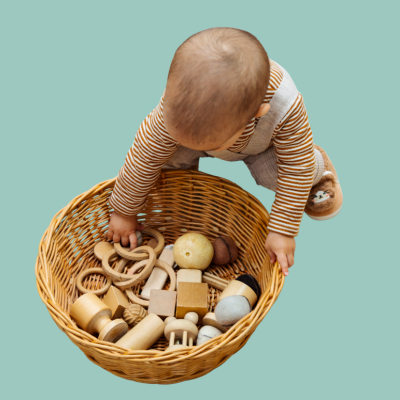
Start With What Your Child Already Loves
Before filling a basket with activities, think about your child's interests.
What naturally holds their attention?
Do they love playdough? Animals? Cars? Stickers? Building? Coloring? Books?
You don't always need a completely new activity to keep a little one engaged. Sometimes the best place to start is with something they already enjoy, and then expand the play from there.
For example, if your child loves playdough, one day you might simply offer playdough and tools.
Another day, add a playdough mat that encourages letter, number, shape, or color recognition.
If they love animals, bring out a few toy animals and let them create habitats, animal tracks, food, or little homes with their playdough. You could even turn that same play experience into a simple conversation about God's creation:
“Look at all these different animals God created! Which animal should we make a home for?”
One interest can become several different activities without constantly buying something new.
The same idea works with other interests, too. A child who loves cars might enjoy driving them through playdough roads, matching them by color, or counting how many cars fit in a “garage.” A child who loves stickers might enjoy sticker scenes one day and a simple letter-matching activity the next.
Follow their interests, then build learning and faith-filled connections around them.
Here are some ideas to help you get started…
🖐️ Fine-Motor Activities
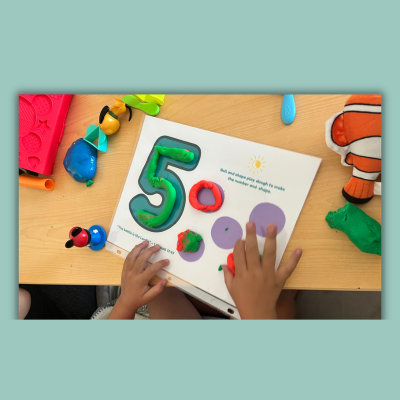
1. Playdough + Tools
Keep playdough simple or add rollers, cutters, stamps, child-safe scissors, and other tools for little hands to explore.
Expand the play: Add alphabet, number, shape, or faith-filled playdough mats.
🛒 Shop This Activity:
[Playdough Texture Rollers] • [Playdough Stamp Set] • [Playdough Set by Melissa & Doug] • [Playdough kit with Child-Safe Playdough Scissors]
💛 Faith-Filled Option: Try our FREE [ABC + 123 of God's Love Playdough Mats] to add letter and number recognition while connecting playtime with simple truths about God's love.
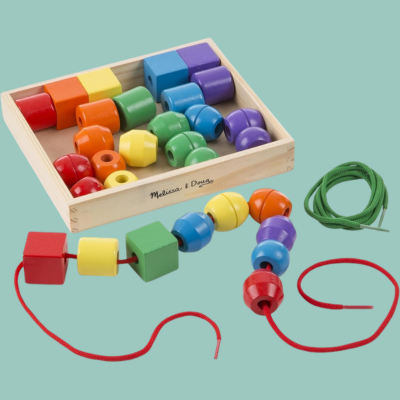
2. Large Lacing Beads
Large lacing beads give little hands something engaging to work with while strengthening fine-motor skills, hand-eye coordination, and concentration as they practice threading each bead onto the string.
Expand the play: Go beyond simply stringing the beads! Encourage your child to sort them by color or shape, create simple patterns, count each bead as they add it, or ask them to find a specific color to string next.
For younger toddlers, simply picking up the beads, exploring the colors, and practicing getting them onto the string is plenty of meaningful play.
🛒 Shop This Activity:
[Large Lacing Beads]
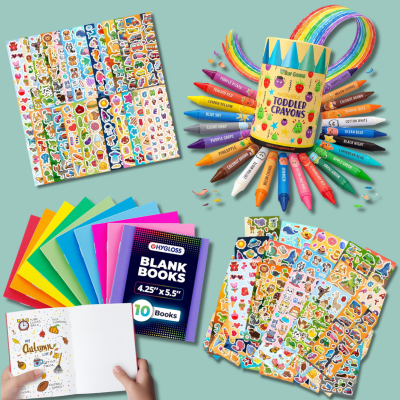
3. Create a Sticker Journal
If your little one loves stickers, turn that interest into their very own Sticker Journal! Give them a blank notebook or sketchbook where they can collect favorite stickers, practice peeling and placing them independently, and create pictures around them.
For toddlers, keep it simple. Peeling and placing stickers is already wonderful fine-motor practice! They might stick them randomly across the page, scribble around or over them, or fill an entire page—and that's okay. They're creating and exploring.
As preschoolers grow, encourage them to turn their stickers into little scenes. Farm animal stickers could become a farm with a hand-drawn barn, grass, and sunshine. Ocean stickers could inspire an underwater world, while dinosaur stickers could become their very own prehistoric adventure.
Expand the play: Follow your child's interests by rotating different sticker themes. Add chunky crayons or washable markers so they can draw around their stickers, create backgrounds, add details, or simply color and scribble. Over time, their Sticker Journal becomes a special collection of their creations that they can continue adding to throughout your homeschool days.
🛒 Shop This Activity:
[Blank Sticker Journal or Sketchbook] • [Themed Sticker Packs] • [Chunky Crayons]
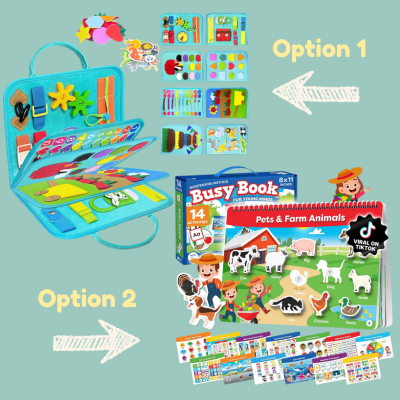
4. Busy Boards & Learning Busy Books
Busy boards and learning busy books are great independent activities for little ones because they give busy hands plenty to explore while building important early skills. Depending on your child's interests and developmental stage, you can choose between a fine-motor busy board or a preschool learning busy book—or rotate between both.
Option 1: Fine-Motor Busy Board
A traditional busy board lets children practice everyday skills through zippers, buttons, buckles, snaps, laces, and other hands-on features.
Little ones can practice opening, closing, pulling, fastening, and problem-solving at their own pace. Once they're familiar with the board, it can become an easy independent activity to pull out while you're working with an older child.
Expand the play: Ask simple questions like, “Can you find the zipper?” or “Which buckle should we try next?” Younger toddlers can simply explore how the different pieces move, open, close, and connect.
🛒 Shop the Fine-Motor Busy Board:
[Green Preschool Busy Board] • [Pink Preschool Busy Board]
Option 2: Preschool Learning Busy Book
For little ones ready for more preschool learning, a learning busy book adds matching and early academic concepts to the hands-on experience.
I especially love this option because I use one with my nephew! It includes activities for letters, numbers, colors, shapes, animals, emotions, weather, days of the week, the human body, and more.
Children can match and place the pieces while practicing fine-motor skills, problem-solving, vocabulary, and early preschool concepts.
Expand the play: Choose one or two pages at a time and ask questions like, “Can you find the red one?” “Which number matches?” or “How is this person feeling?” As your child becomes familiar with the activities, encourage them to complete favorite pages more independently.
For younger toddlers, start with simple matching and familiar pictures rather than expecting them to complete the entire book.
🛒 Shop the Preschool Learning Busy Book:
[Preschool Learning Busy Book]
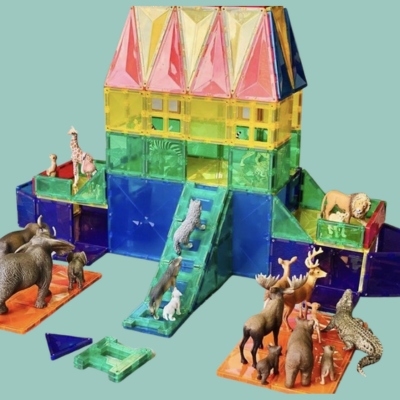
5. Magnetic Tiles
Magnetic tiles are a fun, open-ended activity that gives little ones the freedom to build, create, and use their imagination. They can stack tiles into towers, connect different shapes, or simply explore how the pieces fit together.
Add favorite toy animals, cars, or small figures, and their creations can quickly turn into little imaginative worlds!
Expand the play: Follow your child's interests and give their building a new purpose. They can create houses, churches, animal homes, garages, towers, shapes, or colorful patterns. If your child loves animals, challenge them to build a home for each one. If they love cars, they might create a garage or roadway.
You can even connect their building to a Bible story you've recently read together. Build an ark while talking about Noah, create a tall tower while remembering the Tower of Babel, or make little houses and talk about the people and places from a favorite Bible story.
For younger toddlers, simply connecting, stacking, knocking down, and rebuilding the tiles can provide plenty of meaningful exploration.
🛒 Shop This Activity:
[Magnetic Tiles] • [Safari Toy Animals] • [Farm Toy Animals]• [Sea Toy Animals] • [Toy Cars]
🎨 Quiet Creative Activities
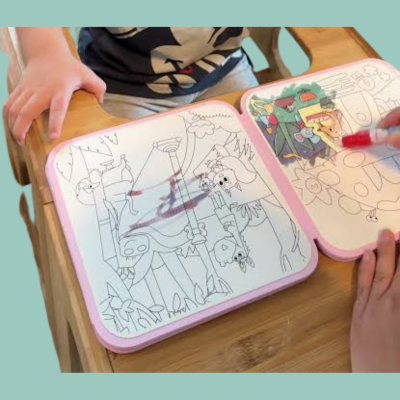
6. Water-Reveal Coloring Books
Water-reveal coloring books or pages are a simple, low-mess activity for little ones who love to color and discover! Children use a water-filled pen to brush across the pages and watch as colors, pictures, and hidden details magically appear.
They're especially helpful during homeschool time because there's minimal setup, no paint or markers to clean up, and many can be used again once the pages dry.
Expand the play: Encourage your child to talk about what they discover as the pictures appear. Ask simple questions like, “What do you see?” “Can you find something blue?” or “How many animals can you find?” You can also choose books based on your child's current interests—animals, dinosaurs, vehicles, letters, numbers, or favorite themes—to help hold their attention longer.
For younger toddlers, simply practicing how to hold the water pen, making strokes across the page, and watching the colors appear can be a fun way to practice early fine-motor skills.
🛒 Shop This Activity:
[Water-Reveal Coloring Books] • [Water-Reveal Coloring Pages]
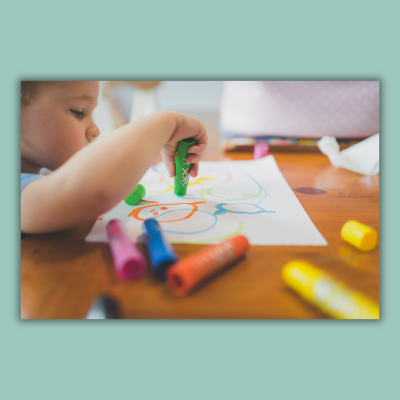
7. Chunky Crayons + Coloring Pages
Sometimes simple is best! Keep a small collection of chunky crayons and rotating coloring pages ready for homeschool time so your little one has an easy creative activity you can pull out whenever needed.
Chunky crayons are especially helpful for little hands that are still developing their grasp and learning how to make marks on paper. And remember, toddlers don't need to color perfectly inside the lines! Scribbling, experimenting with different colors, and making their own marks are all part of the learning process.
Expand the play: Choose coloring pages based on what your child is currently interested in or learning about—animals, vehicles, letters, numbers, shapes, nature, or favorite Bible stories. You can also use coloring time to start simple conversations about God's Word. A creation coloring page, for example, can become an opportunity to talk about something God made while your child colors.
Rotate the pages occasionally to keep the activity interesting, or let your child choose which page they would like to color that day.
🛒 Shop This Activity:
[Chunky Crayons] • [Preschool Coloring Pages]
💛 Faith-Filled Option: Try our FREE [Little Faith Play Coloring Pages] for simple coloring activities that help little hearts explore biblical truths while they create.
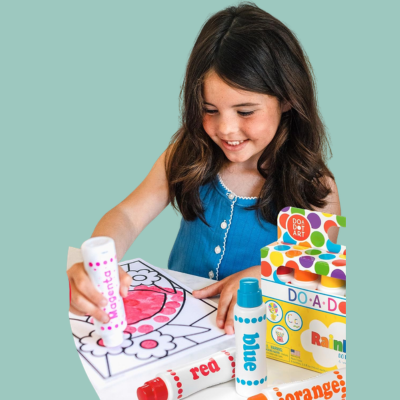
8. Dot Markers
Dot markers are a fun, colorful, and easy-to-grab activity that gives little ones plenty of opportunities to create while practicing hand-eye coordination and fine-motor control.
Let your child dot freely across a blank piece of paper, mix colors, make simple pictures, or use dot-marker printables for a little more structure. For younger toddlers, simply learning to press the marker onto the paper and watching a colorful dot appear can be part of the fun!
Expand the play: Dot markers can grow right along with your child's learning. Use them to practice letters, numbers, shapes, colors, patterns, or counting. Your child could dot along the letter A, place five dots on the number 5, make a simple color pattern, or fill a picture with colorful dots.
You can also follow your child's interests when choosing printables—animals, transportation, nature, favorite foods, or Bible themes can make the activity even more engaging.
And don't feel like every dot-marker activity needs a printable! Give your little one a large sheet of paper or cardboard and let them dot, stamp, overlap colors, and create freely.
🛒 Shop This Activity:
[Washable Dot Markers]
💛 Faith-Filled Option: Try our FREE [ABC + 123 of God's Love Dot Painting Pages] to combine colorful dot-marker play with early letter and number learning and simple truths about God's love.
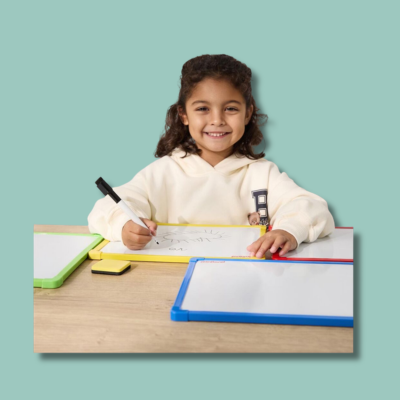
9. Reusable Drawing Tablet or Whiteboard
A reusable drawing tablet or whiteboard gives little ones a simple place to doodle, draw, practice, and create over and over again—without going through a stack of paper.
Children can use the blank surface independently to scribble, experiment with lines and shapes, draw pictures, or simply enjoy making marks and erasing them to start again. This makes it an easy activity to keep in your homeschool rotation.
For younger toddlers, simply making scribbles, lines, circles, and different marks is meaningful practice as they strengthen the little hand muscles and coordination they'll eventually use for writing.
Expand the play: If you choose a double-sided whiteboard with a blank side and a lined or pre-writing side, you can use it for even more activities. Your child can freely create on the blank side, then use the other side to practice pre-writing skills by tracing straight lines, horizontal and vertical lines, curves, zigzags, and other simple strokes.
As your child grows, you can also invite them to copy shapes, practice letters or numbers, draw simple patterns, or create something related to what they're currently learning.
You can even add little faith-filled prompts such as, “Can you draw something God created?” They might draw a flower, sunshine, an animal, their family—or their own wonderfully scribbled version of God's creation. 💛
Or turn it into a simple back-and-forth game! Draw a line or shape for your child to copy, make a picture for them to guess, or let them create something for you to guess.
🛒 Shop This Activity:
[Reusable Drawing Tablet] • [Double-Sided Preschool Whiteboard]• [Magnetic Double-Sided Preschool Whiteboard]
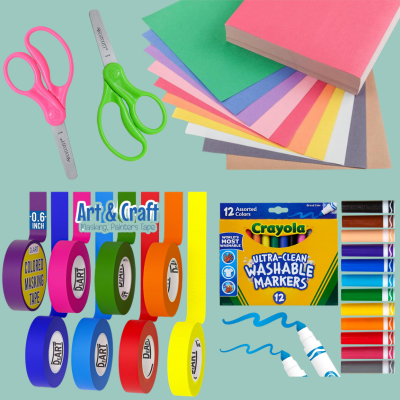
10. Open-Ended Creative Art Basket
Sometimes little ones don't need instructions or a finished craft to copy—they just need interesting materials and the freedom to create!
Put together a simple Creative Art Basket filled with a variety of child-friendly materials your little one can explore during homeschool time. You might include:
Colorful play tape or washi tape
Yarn
Stickers
Chunky crayons or washable markers
Construction paper or colored paper
Small pieces of clean cardboard
Toddler-safe scissors
Then let their imagination take the lead!
They might tape pieces of paper together, practice snipping cardboard or yarn, cover a page with stickers, draw across different materials, or combine everything into a creation that only makes sense to them.
There doesn't need to be a specific end result. Open-ended art gives children opportunities to explore materials, make choices, problem-solve, practice fine-motor skills, and use their imagination in their own way.
Expand the play: Follow your child's interests and occasionally rotate the materials in the basket. Add tissue paper, craft sticks, pom-poms, paper shapes, or other child-safe materials you already have at home. You can also save clean cardboard, wrapping-paper scraps, ribbons, and interesting pieces of paper for future creations.
For younger toddlers, keep the selection smaller and simpler. A few crayons, stickers, paper, and pieces of tape may be all they need. As they become more comfortable creating independently, introduce additional materials.
And remember—the masterpiece might not always make sense to us. That cardboard covered in tape, yarn, stickers, and purple scribbles might be very important work to the little artist who made it.
🛒 Shop This Activity:
[Toddler-Safe Scissors] • [Colorful Play Tape] • [Washable Markers] • [Construction Paper]
🧺 Simple Activity Bins | Trays
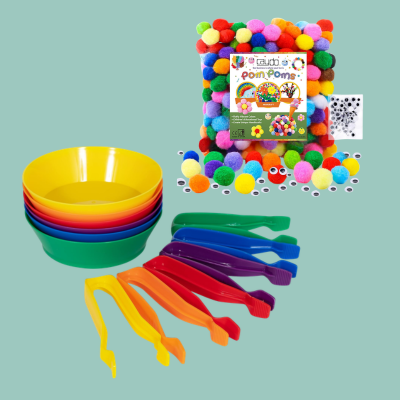
11. Pom-Pom Sorting
A handful of colorful pom-poms can turn into a simple hands-on activity that keeps little fingers busy while practicing fine-motor skills, hand-eye coordination, sorting, and early math concepts.
Set out colorful pom-poms with a few small bowls, cups, or containers and child-safe tongs. Let your little one practice picking up the pom-poms and transferring them from one container to another.
For younger toddlers, simply grasping, transferring, and exploring the different colors can be plenty of meaningful play. Always supervise young children closely, since pom-poms can be a choking hazard.
Expand the play: As your child grows, turn the activity into a simple sorting or counting game. Invite them to sort pom-poms by color or size, count how many are in each container, create simple color patterns, or match pom-poms to colored bowls or pieces of construction paper.
You can also add an empty egg carton, muffin tin, or ice cube tray and encourage your child to place one pom-pom into each space. Older preschoolers can even use number cards and count out the correct number of pom-poms for each one.
And remember, it doesn't always need to have a learning goal! Sometimes transferring a giant pile of fuzzy pom-poms from one bowl to another is exactly the kind of very important work a little one wants to do.
🛒 Shop This Activity:
[Colorful Pom-Poms] • [Sorting Bowls with Child-Safe Tongs]
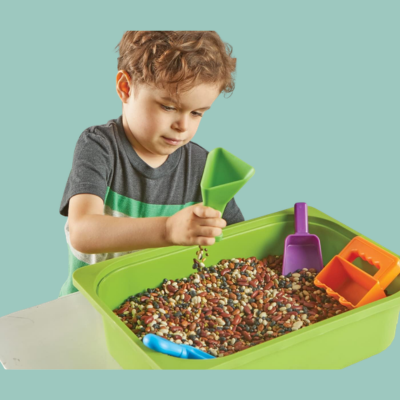
12. Scooping & Pouring
Sometimes the simplest activities can keep little hands the busiest! A few cups, bowls, scoops, and a sensory material can become an easy hands-on activity for practicing pouring, transferring, filling, and dumping.
Set out a shallow bin or tray with your sensory material and add measuring cups, spoons, scoops, funnels, or small containers. Then let your little one explore!
For younger toddlers, simply scooping from one bowl and pouring into another can provide plenty of meaningful practice while strengthening fine-motor skills, hand-eye coordination, and independence.
Expand the play: Change the tools or sensory material to make the same activity feel new. Your child can scoop and pour water, taste-safe sensory materials, or other age-appropriate materials you already have at home. Add different-sized containers and let them discover which holds more, which fills up faster, or how many scoops it takes to fill a cup.
You can also follow your child's interests! Add toy animals for pretend feeding, construction vehicles for scooping and dumping, or cups and bowls for pretend cooking.
For older preschoolers, bring in simple early-math language as they play: “Which cup has more?” “Which one is empty?” “How many scoops will fill this bowl?”
And don't worry if your little one spends the entire activity pouring the same thing back and forth again and again. Repetition is part of how little ones learn! 💛
Choose sensory materials that are developmentally appropriate for your child, and supervise closely—especially with younger children or materials that could pose a choking hazard.
🛒 Shop This Activity:
[Sensory Scoops + Funnel] • [Child-Friendly Measuring Cups] • [Sensory Activity Bin]
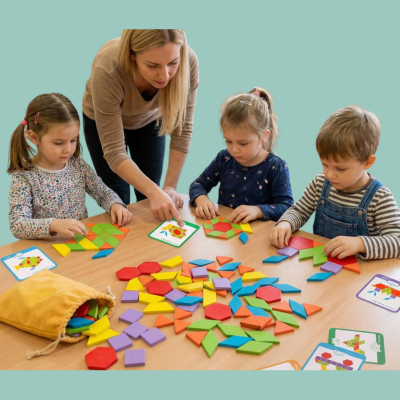
13. Matching Activities
Matching activities are a simple way to keep little hands and minds engaged while helping children practice visual discrimination, concentration, problem-solving, and early learning skills.
Set out a simple matching activity based on your child's age and interests. They can match colors, shapes, letters, numbers, animals, pictures, or familiar everyday objects.
For younger toddlers, keep it simple with just a few matching pairs at a time. They might match two identical animal pictures, place colored objects onto matching colored paper, or find two pictures that are the same. As they become more confident, gradually add more choices.
Expand the play: Follow what your child is currently learning or interested in. If they love animals, match baby animals to their parents or identical animal pictures. If they're learning colors or shapes, create simple matching games around those concepts. Older preschoolers can begin matching uppercase and lowercase letters, numbers to quantities, or pictures that belong together.
You can even make your own matching activities using things you already have! Match socks from the laundry basket, toy animals to printed pictures, colored blocks to construction paper, or household objects to simple picture cards.
Matching can also become a faith-filled activity. Your child might match animals while talking about God's creation, match pictures from a familiar Bible story, or use faith-filled letter and number activities to connect early learning with God's Word.
🛒 Shop This Activity:
[Alphabet Matching Game] • [Animal Matching Game] • [My First Matching Game] • [Shape Wooden Pattern Match]
💛 Faith-Filled Option: Try our [What God’s Love Looks Like Matching Game] for another simple way to bring early learning and faith-filled play together.
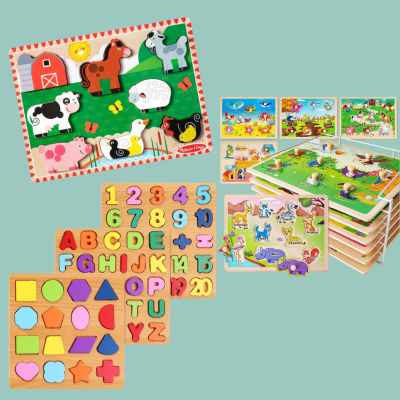
14. Simple Puzzles
Simple puzzles are a great quiet-time activity that encourages little ones to slow down, problem-solve, and work independently while you're helping an older child with schoolwork.
Choose puzzles that match your child's current ability and interests. A child who loves animals might enjoy a farm or zoo puzzle, while another child may be more interested in vehicles, dinosaurs, shapes, letters, or numbers. Choosing something they already enjoy can make them more likely to return to the activity on their own.
For younger toddlers, start with simple large-piece or knob puzzles with only a few pieces. As their puzzle skills grow, introduce puzzles with more pieces and slightly more challenging pictures.
Expand the play: Use the pictures on the puzzle to encourage learning and conversation. Your child can name the animals, identify colors and shapes, make animal sounds, count the pieces, or talk about what they see as they put the puzzle together.
You can also rotate puzzles instead of keeping every puzzle available at once. Put a few away and bring them back into the homeschool basket later—sometimes an old puzzle feels brand new when a little one hasn't seen it for a while!
And don't worry if your child wants to complete the same puzzle again and again. Repetition helps little ones build confidence, remember where pieces belong, and eventually complete familiar puzzles with less help.
🛒 Shop This Activity:
[Large-Piece Toddler Puzzle] • [Wooden Knob Puzzles] • [Preschool Puzzles]
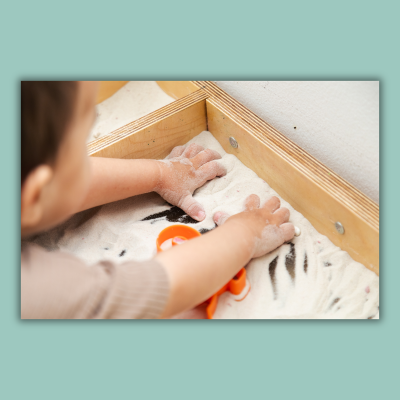
15. Sensory Bins
Sensory bins are a wonderful way to give little ones opportunities to scoop, pour, search, sort, explore, pretend, and tell stories through hands-on play.
Start with a simple bin or container, add an age-appropriate sensory material, and include a few tools or toys based on your child's current interests. You don't need an elaborate setup—a simple sensory bin can provide plenty for little hands to discover.
For younger toddlers, keep the bin simple with a few larger, age-appropriate items to scoop, move, find, and explore. Always choose materials that are safe for your child's developmental stage and supervise closely, especially when using items that could pose a choking hazard.
Expand the play: Instead of creating an entirely new sensory bin every time, change the toys, tools, or theme! Add farm animals one week, construction vehicles another week, or ocean animals when your little one is interested in sea life. You can also hide letters, numbers, shapes, or other learning pieces inside for your child to find.
Sensory play can even become a fun way to bring stories and God's Word into playtime. Add age-appropriate figures or props from a familiar Bible story and let your child retell or explore parts of the story through play. An animal-themed bin, for example, could naturally lead to conversations about Noah's ark or all the amazing animals God created.
And remember, you don't always need to direct the play. Sometimes simply giving your child time to scoop, pour, discover, and imagine is enough. Follow their interests and see where their play takes them!
🛒 Shop This Activity:
[Round Sensory Bin with Lid] • [Blue Age-Appropriate Sensory Starter Kit] • [Purple Age-Appropriate Sensory Starter Kit] • [Sensory Play Activity Cards] • [Sensory Play Droppers for Kids]
Don't Forget Quiet-Time & Faith-Filled Options
Not every activity needs to be a traditional “busy activity.”
You can also keep a few quiet, faith-filled resources available during homeschool time:
Christian picture books
Bible story books
Faith-filled coloring pages
Little Faith Play printables
Playdough mats
Audiobook or read-aloud time
These can create opportunities for your younger child to hear God's Word, experience it through play, connect it to something familiar, and begin living it out in everyday moments.
Try a Simple Homeschool Rotation
Your younger child doesn't necessarily have to play independently the entire time you're helping an older sibling.
Instead, try creating a simple homeschool rotation where everyone knows that they will have a turn with you.
This is something we often use in preschool classrooms. Children rotate through different activities or learning areas, and one of those rotations may include focused time with the teacher. You can bring that same idea into your homeschool day—just on a smaller, more flexible scale.
You might tell your little one:
"I'm going to help your brother/sister with schoolwork while you play with your activity. When we're finished, it will be your turn to have time with me."
This helps your younger child begin to understand that you're not simply unavailable—their turn is coming too.
Try a 15-Minute Rotation
If your children respond well to predictable routines, you could even use a simple timer.
For example:
First 15 minutes:
Older child → One-on-one schoolwork with you
Younger child → Playdough activity
Next 15 minutes:
Younger child → One-on-one time with you
Older child → Independent work, reading, or another activity
Next 15 minutes:
Older child → One-on-one schoolwork with you
Younger child → Sticker Journal
Then continue rotating as needed.
Your one-on-one time with your younger child doesn't have to look like formal school. You might read a book together, practice letters or numbers, complete a simple printable, build something, talk about a Bible story, or simply join them in play.
Make the Rotation Work for Your Family
Fifteen minutes is only an example—not a rule.
A younger toddler may only manage five or ten minutes before needing a change, while an older preschooler may happily stay with an activity much longer.
Pay attention to your children's ages, attention spans, interests, and what your older child's lesson requires. Some days the rotation may work beautifully. Other days, you may need to change the plan—and that's okay.
The goal isn't to create a perfectly timed classroom at home.
It's to create a predictable rhythm where both children receive opportunities for independent exploration and intentional time with you.
Over time, your little one can begin learning the rhythm:
My sibling has a turn. I have something to do. Then I get a turn too.
Create a Younger Sibling Homeschool Basket
One of the easiest ways to put these ideas into practice is to create a special Younger Sibling Homeschool Basket.
You don't need to put every activity in it at once.
Think of this list as inspiration, not a shopping checklist. You may already have many of these materials at home! Use what you have, choose activities your child genuinely enjoys, and use the shopping links throughout this post whenever you need something to complete an activity.
Instead, choose about 4–6 activities based on your child's current interests and rotate them periodically.
For example, this week's basket might include:
Playdough + animal figures
Sticker Journal + a favorite sticker pack
Simple puzzle
Dot markers + printable
Magnetic tiles
A favorite Christian picture book
Next week, keep the activities they're still enjoying and swap out the ones that have lost their interest.
This helps keep the basket feeling fresh without constantly purchasing new toys or creating elaborate activities.
And remember: your child's homeschool basket doesn't have to look like anyone else's.
One little one may happily build with magnetic tiles while another would rather color, scoop, sort, or listen to the same story for the tenth time.
Follow their interests. Keep it simple. Rotate when needed.
And when the opportunity naturally comes, use those ordinary moments of play to connect what they're experiencing back to learning, conversation, and God's truth.
Because even while you're homeschooling the big kids, meaningful learning can still be happening in those little hands beside you. 💛